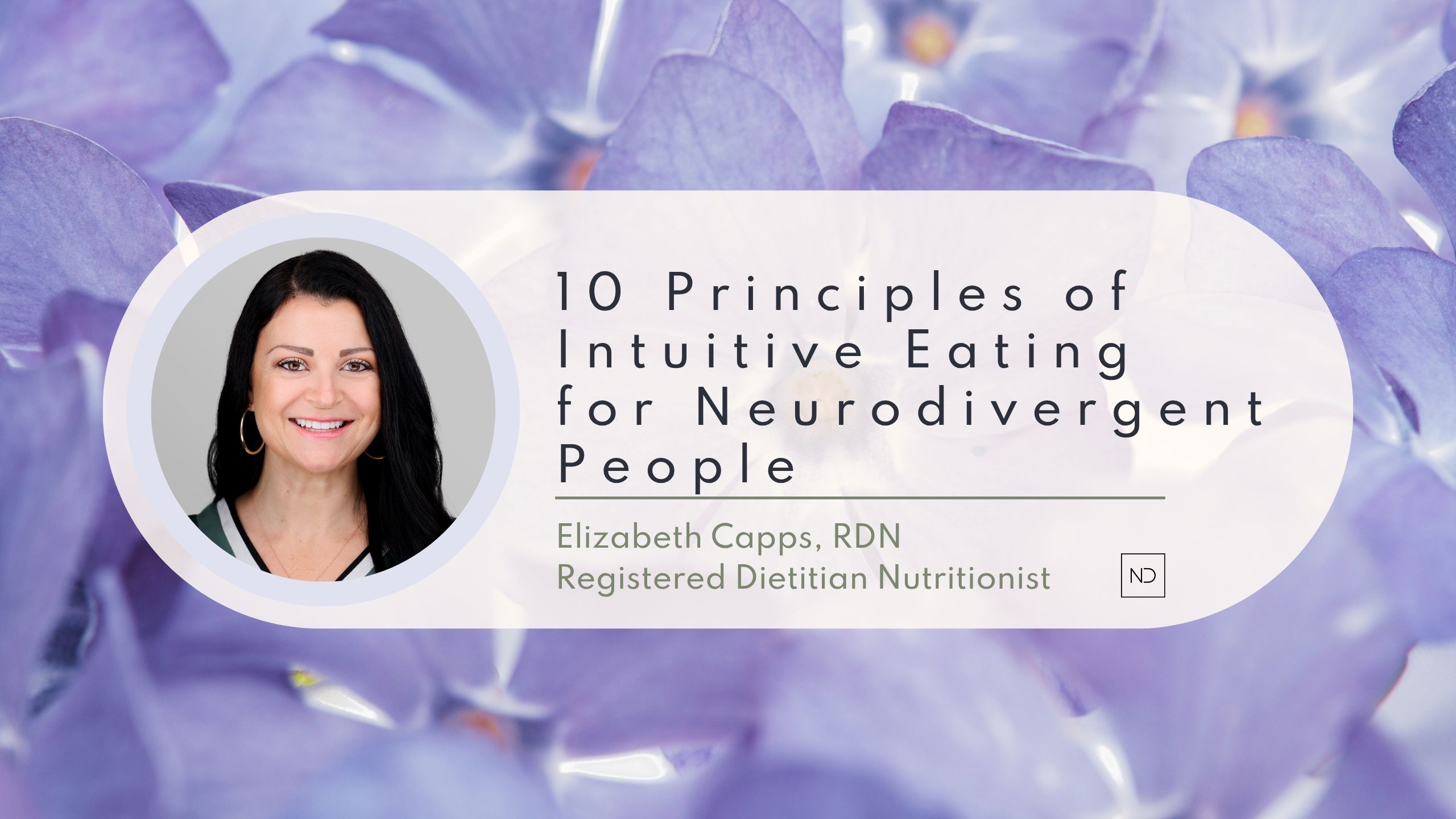
10 Principles of Intuitive Eating for Neurodivergent People
Written by: Elizabeth Capps, RDN
Mindfulness has roots in several Buddhist traditions, including Indian, Tibetan, and Japanese lineages. Across these practices, the emphasis is on meditation and internal awareness—learning to notice thoughts, feelings, and bodily sensations. This mindful awareness later became a foundation for how many people approach their relationship with food and their bodies. Building on that framework, Evelyn Tribole and Elyse Resch introduced the book Intuitive Eating, a model that challenges restrictive, rule-based dieting in favor of attuned, flexible eating guided by internal cues. Over time, their evidence-based approach has been embraced by a growing community of health professionals and individuals seeking freedom from diet mentality.
This post serves as a practical and compassionate guide to intuitive eating, reimagined through the lens of neurodiversity, offering concrete adaptions and affirmations to empower all readers on their path to food freedom. It explores how the core principles of intuitive eating can be adapted to support the unique sensory, emotional, and behavioral needs of neurodivergent individuals, including those with ADHD, ASD, and OCD. My hope is that readers will find thoughtful strategies for overcoming common barriers, fostering self-compassion, and cultivating a positive relationship with food that honors both body and mind.
Here’s a look at each principle through a neurodivergent lens:
1. Reject Diet Culture
The first principle encourages abandoning diet culture’s restrictive rules and beliefs about food. Traditionally, this means letting go of calorie counting, meal plans, and the notion that certain foods are inherently “bad.” Instead, intuitive eating invites you to trust your body’s signals and develop a relationship with food based on internal cues rather than external pressures.
Neurodivergent Adaptation: A wonderful place for anyone to start rejecting the diet mentality is to evaluate personal biases. Examine the thoughts and feelings surrounding food in the household and any verbalizations or judgements surrounding body shape and size. Evaluate current social media influences and how that may be shaping your own views of food and body image. For individuals with ASD, ADHD, or OCD, the rigidity of diet rules can be especially challenging, exacerbating executive function difficulties or perfectionist tendencies.
Practical Application: Begin to challenge negative thoughts about food and body image. Shift into a place of neutral language by thinking of what the food provides for you and how you are honoring your body by feeding it. Find things about your body that you enjoy, if this proves to be a challenge, think about what your body can do for you. Examples can include my legs take me places, my stomach digests food, or my arms allow me to hug loved ones. Set boundaries with those who speak negatively about food and/or bodies. Unfollow or mute any social media accounts that could be contributing to negative feelings. Let go of diet culture’s rigid rules. This can be especially freeing for people who struggle with executive function; instead of tracking calories or following strict plans, focus on building self-compassion and trusting your own process.
2. Honor Your Hunger
This principle invites you to recognize and respond to your body’s hunger signals, rather than ignoring or suppressing them. The goal is to nourish yourself before you become overly hungry, which helps prevent overeating and supports physical well-being.
Neurodivergent Adaptation: Sensory processing differences may make hunger cues hard to detect or interpret for neurodivergent individuals. If solely relying on bodily sensations to eat, this may delay eating to a point of feeling dizzy, shaky, or highly irritable. External prompts, structured routines, or hunger rating scales can help bridge this gap. For folks with ADHD, impulsive eating might be a cue that hunger has been overlooked until it becomes urgent; for ASD, hunger may be masked by sensory discomfort or routine adherence.
Practical Application: Keep a journal tracking bodily sensations and patterns to better recognize subtle cues. This can include cues to use the restroom, cues for thirst, as well as cues for hunger. Use mechanical eating, or “timed nutrition” by setting regular meal and snack times, use alarms or post its as reminders. Practice mindfulness exercises to focus on bodily sensations, distinguishing hunger from anxiety-driven urges to eat.
3. Make Peace with Food
Making peace with food allows all foods with the intention of eating within moderation, balance, and variety. The intention is to grant unconditional permission to eat all foods without guilt. This principle helps break the cycle of restriction and bingeing, allowing you to enjoy food without fear or shame.
Neurodivergent Adaptation: Sensory preferences, food aversions, and anxiety may influence food choices for neurodivergent individuals. Instead of forcing variety, it’s important to honor preferences and gradually expand options at a comfortable pace, if desired. For OCD, anxiety around food safety may require gentle exposure and support.
Practical Application: Start with safe, preferred foods and work with a dietitian or therapist to slowly try new foods, as desired. Allow flexibility in food choices and focus on creating a position of neutrality with food thoughts. Work on reducing food-related anxiety by introducing new foods in small, manageable steps and using relaxation techniques before meals. Utilize ERP (exposure response prevention) therapy as appropriate and indicated.
4. Discover the Satisfaction Factor
Satisfaction in eating is about finding pleasure and fulfillment in food choices, meals, and eating environments. This principle recognizes that satisfaction is a key component in feeling content and preventing overeating.
Neurodivergent Adaptation: Intuitive eating focuses on mindful eating, eating without distraction with the intention of checking in with hunger and fullness levels. For folks with neurodivergence, this may be incredibly difficult due to the need for external stimulation to feel regulated. Sensory sensitivities may mean that satisfaction comes from specific textures, flavors, or routines. For OCD, satisfaction may be hindered by anxiety, so creating a calm and predictable eating space is important.
Practical Application: Experimentation with environments, food presentation, and meal timing can help neurodivergent individuals find joy in eating. This may mean different things for different people. Arrange meals to include favorite textures and flavors and use creative plating or music to enhance meal enjoyment and maintain attention during eating. For some folks, external stimulation while eating may help the eating experience. Try utilizing a fidget toy, placing elastic bands at the bottom of your chair, or moving around if safe. If eating feels particularly overwhelming, establish a relaxing pre-meal routine, such as deep breathing or listening to soothing music, to reduce anxiety and enhance satisfaction.
5. Feel Your Fullness
This principle is about observing your body’s signals to recognize when you’re comfortably full, rather than relying on external cues or strict meal plans. It encourages mindful awareness during meals to help prevent overeating.
Neurodivergent Adaptation: For individuals with ASD, interoceptive signals (internal cues from the body) might be muted or confusing, making it harder to sense fullness. ADHD can affect attention during meals, leading to missed fullness cues, while OCD may cause anxiety about food intake and uncertainty about whether one is truly full.
Practical Application: The focus should be on eating enough and eating consistently throughout the day to help maintain focus, energy, and blood sugar balance. If “eating enough” feels obscure or challenging, focus on 2-3 food groups for snacks and 3-5 food groups for meals. Food groups include fruits, vegetables, grains, dairy, protein, and dietary fats. It helps to incorporate protein and fat in meals and snacks to aid in the feeling of fullness and to help prevent blood sugar crashes.
To help tune into fullness cues, a visual fullness scale (like a chart with faces or numbers) may help to identify and track sensations of fullness during meals. Set reminders to pause and check in with your body mid-meal.
6. Challenge the Food Police
This principle targets the internal and external voices that judge food choices, labeling foods as “good” or “bad.” It encourages self-acceptance and helps quiet negative self-talk related to eating.
Neurodivergent Adaptation: Rigid thinking and perfectionism can make self-judgment around food especially intense for neurodivergent individuals. Food aversions can create rigidity around food and limited variety. Replacing negative thoughts with positive affirmations, using cognitive reframing, and seeking support can help foster self-compassion.
Practical Application: Folks can create a visual meal schedule that allows for preferred foods and textures while gently introducing new options, as desired. Use phone alarms or sticky notes as reminders to eat, focusing on consistency rather than rigid rules. Write down affirmations about food choices and post them in visible places to reinforce positive thinking. Work with a dietitian or therapist to slowly reduce ritualistic behaviors around food, celebrating small steps toward flexibility.
7. Cope with Your Feelings with Kindness
This principle recognizes that emotions often influence eating habits. It encourages finding compassionate ways to cope with feelings without relying solely on food for comfort. Food can be a source of comfort, but it’s important to explore other ways to manage emotions. Neurodivergent individuals may benefit from tailored coping strategies, such as sensory tools, creative outlets, or professional support.
Neurodivergent Adaptation: ASD may bring heightened emotional responses or sensory overload, making emotional eating more likely. ADHD can mean impulsive eating in response to strong feelings, and OCD may involve emotional distress around food rituals or choices. While it is important to try and identify if someone is using food to cope with emotional regulation, for neurodivergent folks, hunger cues may present as emotional. Feelings of restlessness, irritability, or urges to stim may be clues to internal hunger cues. It is important to recognize and honor where these emotions are coming from and that taking in energy from food may help to regulate mood and emotional states.
Practical Application As much as possible, try to identify the emotion felt and utilize a coping skill when applicable. Use sensory tools (like fidget items or weighted blankets) before meals to manage emotions and reduce the urge to eat for comfort. Keep a creative journal or sketchbook nearby to redirect emotional energy away from food and into expressive outlets. Practice self-soothing techniques like gentle breathing or guided meditation to break the cycle of anxious food-related thoughts.
8. Respect Your Body
Respecting your body means accepting and appreciating your unique shape and abilities, regardless of societal standards. It’s about self-compassion and rejecting comparison.
Neurodivergent Adaptation: ASD, ADHD, and OCD can affect body image and self-esteem, sometimes due to sensory sensitivities, executive function challenges, or anxiety about perfection. Focusing on what your body can do, rather than what it looks like, is key.
Practical Application: Wear comfortable clothing that fits your sensory preferences and celebrate small achievements in body awareness. Make a habit of writing positive affirmations about your body and place them where you’ll see them often. Challenge perfectionist thoughts with compassionate self-talk and seek support from groups with similar experiences. Try to focus on intrinsic value, positive characteristics and physical capabilities.
9. Movement—Feel the Difference
This principle encourages engaging in enjoyable movement, not for calorie burning, but for how it feels and how it benefits overall well-being. Movement is particularly important in mental health treatment as it has many positive effects such as increased neurotransmitters, reducing anxiety, improvement in depressive symptoms, improved sleep, increasing cognitive function, reduced physical symptoms of stress, increased confidence, and emotional regulation.
Neurodivergent Adaptation: The purpose is to find movement that is fun, engaging, and works with sensory input needs. Try not to view movement as a chore or obligation, but something that can assist with longevity and overall wellness.
Practical Application: Embrace stimming or gentle stretching as valid forms of movement; try sensory-friendly activities like swimming or yoga. Incorporate music or group activities to make movement more engaging and consistent; switch up routines to prevent boredom. Set realistic movement goals and allow flexibility in routines to reduce anxiety about perfection or strict schedules. Engage in physical activity in ways that feel good, whether it’s stimming, walking, or dancing. Adapt movement to your abilities and interests, and prioritize enjoyment over performance.
10. Honor Your Health with Gentle Nutrition
Gentle nutrition is about making healthful food choices without rigidity or guilt. It prioritizes flexibility and pleasure, not perfection.
Neurodivergent Adaptation: Those with ASD may have sensory aversions or preferred foods, so gentle nutrition balances familiar foods with gradual introduction of new ones. Those with ADHD can benefit from simple, easily prepared meals and reminders to eat regularly. Those with OCD might require reassurance that flexibility is healthy and safe.
Practical Application: The most important priority is getting enough overall nutrition. Adding in balance and variety can be done in a slow gradual way. Pair favorite foods with new ones in small amounts to expand variety at your own pace and allow for sensory preferences. Prep easy, grab-and-go snacks, utilize frozen meals, and keep a rotating meal schedule visible to support regular eating habits. Use gentle reminders that nutrition isn’t about perfection and seek support from a dietitian or therapist when rigid thoughts arise.
Nutrition doesn’t require perfection. For neurodivergent individuals, gentle nutrition means incorporating foods in a flexible, non-judgmental way that respects sensory needs and routines. Ultimately, intuitive eating for neurodivergent individuals is about validating unique needs and experiences, dismantling shame, and fostering a relationship with food that is rooted in acceptance, curiosity, and respect for both body and mind. By recognizing and adapting to the distinct eating behaviors associated with ASD, ADHD, and OCD, neurodiverse food freedom becomes an empowering path toward nourishment and self-acceptance.
Do you have a question?
Send us a message