Using Proprioception to Reset and Regulate the Nervous System
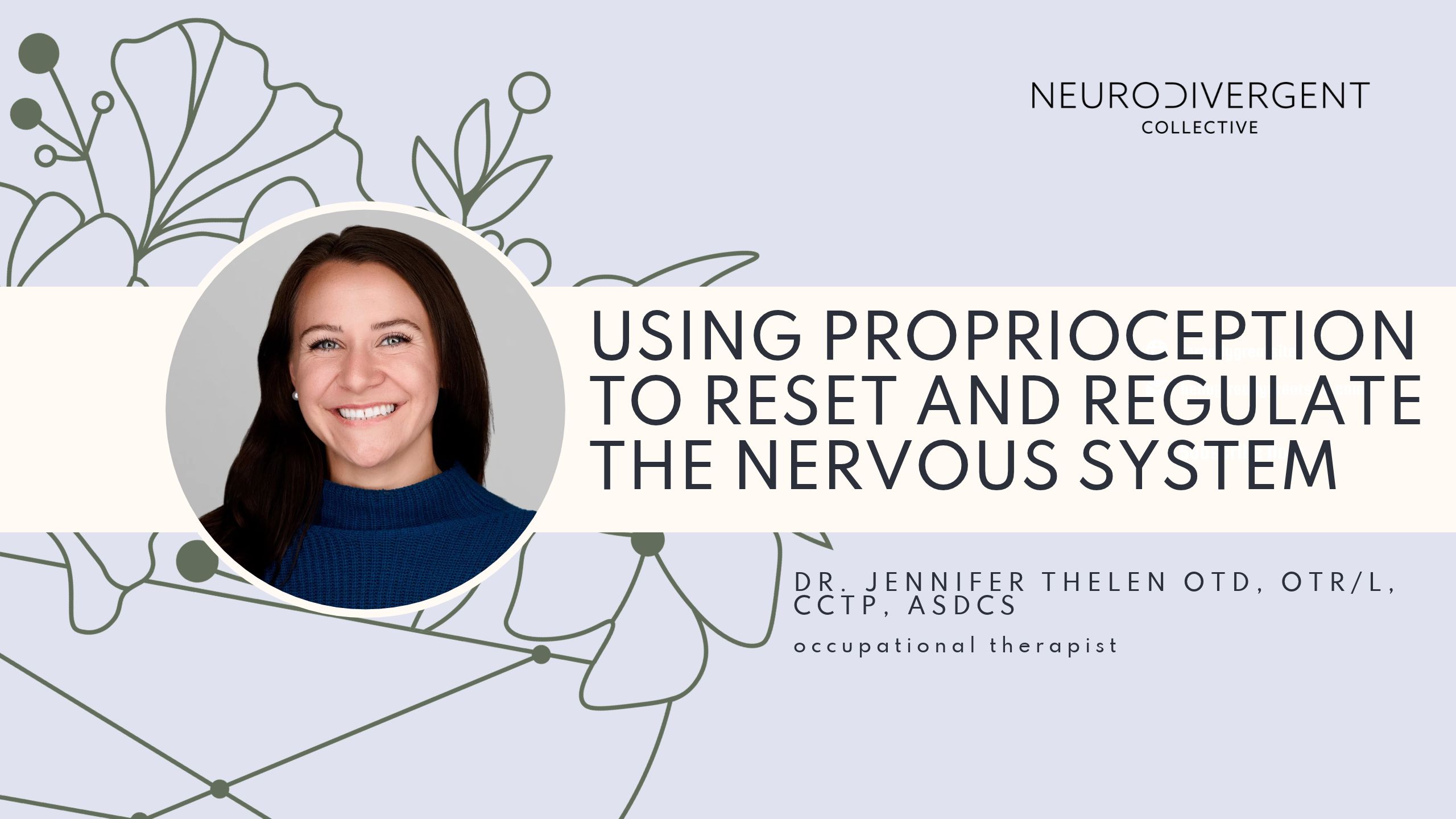
An Interview with :: Dr. Jennifer Thelen, OTD, OTR/L, CCTP, ASDCS – Occupational Therapist
When stress or sensory overload peaks, cognitive strategies like positive thinking or deep breathing don’t always break through. In clinical practice, occupational therapists often turn to the body’s physical mechanics to signal safety directly to the brain. Below, Dr. Jennifer Thelen explains how sensory feedback to our joints and muscles can serve as an accessible, rapid reset for autonomic regulation.
What Is Proprioceptive Input and “Heavy Work”?
“So, proprioceptive input is input on the joints, so a lot of people will call it like the “hard work”.”
Proprioception is the internal sense that tells your brain where your limbs are in space. When muscles contract and joints compress through resistance, often referred to as heavy work, mechanoreceptors send organizing neurological signals directly to the central nervous system, helping quiet fight-or-flight arousal.
How Pressure on Joints Calms the Nervous System
“You’ll get the weighted blanket, you’ll do wall push-ups, chair push-ups, and that pressure on the joints is really calming to the nervous system.”
Pressure and active resistance can provide stabilizing sensory feedback. Whether using external aids like weighted blankets or bodyweight exercises like push-ups, the resulting joint compression triggers down-regulation, reducing sensory defensiveness and promoting calm.
Simple Ways to Regulate at Work, School, or on the Go
“Little ways like giving yourself a hug, right, that’s a gentle form of proprioceptive input. In classes and work, pulling on the chair, pushing up there’s little things you can do, that just help with that regulation piece.”
Nervous system regulation does not require special equipment or private spaces. Subtle micro-movements, like a firm self-hug, gripping the underside of a chair seat to pull up, or doing subtle seated push-ups against armrests, deliver immediate grounding input discreetly throughout the day.